
As winter fades and spring arrives, rural communities begin to come back to life. Warmer temperatures, longer days, and the start of planting season bring new energy and opportunity. However, spring also introduces a unique set of health and safety considerations. From seasonal allergies to increased outdoor activity and changing weather conditions, taking a proactive approach can help you and your family stay safe and healthy throughout the season.
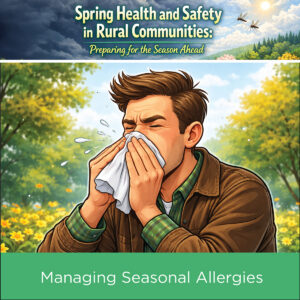 Managing Seasonal Allergies
Spring often brings an increase in pollen from trees, grasses, and other plants, which can trigger seasonal allergies. Symptoms such as sneezing, congestion, itchy eyes, and fatigue can impact daily life, especially for those who spend long hours outdoors.
To help manage allergies, consider limiting outdoor exposure during peak pollen times, keeping windows closed on high pollen days, and changing clothes after working outside. Over-the-counter medications may also provide relief, but it is important to speak with your healthcare provider if symptoms become severe or persistent.
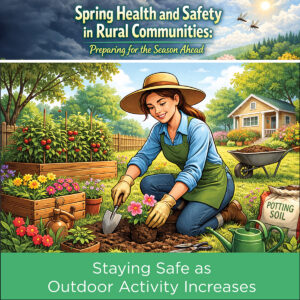
Staying Safe as Outdoor Activity Increases
With the arrival of spring, many rural residents return to outdoor work and recreation. Whether it is yard work, walking, or tackling spring projects, increased activity can raise the risk of injury.
Taking time to stretch before physical tasks, using proper lifting techniques, and wearing appropriate footwear can help prevent common injuries. It is also important to pace yourself, especially when transitioning from a less active winter routine to more demanding spring activities.
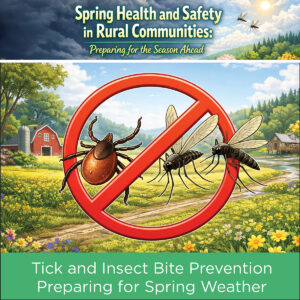
Tick and Insect Bite Prevention
As temperatures rise, ticks and other insects become more active in rural areas. Spending time outdoors, whether in fields, wooded areas, or even your own yard, can increase the risk of bites that may lead to illnesses such as Lyme disease or other infections.
Wearing long sleeves and pants, using insect repellent, and checking your body and clothing after spending time outside are simple but effective ways to reduce risk. Pets can also carry ticks indoors, so regular checks are important for them as well. If you notice a tick bite or develop symptoms such as a rash or fever, contact your healthcare provider.
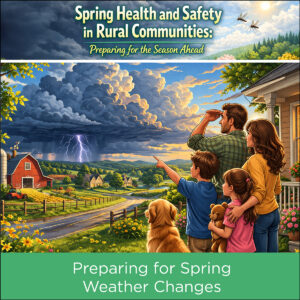
Preparing for Spring Weather Changes
Spring weather in rural areas can be unpredictable, with the potential for severe storms, strong winds, and sudden temperature changes. Being prepared is essential, especially in areas where emergency services may take longer to reach you.
Make sure your household has an emergency plan in place and that you have essential supplies such as water, flashlights, batteries, and necessary medications. Staying informed about weather conditions and having a reliable way to receive alerts can help you respond quickly when severe weather approaches.