
November is American Diabetes Month, a time to raise awareness about a condition affecting millions of Americans. Whether you’re living with diabetes, managing prediabetes or simply looking to protect your long-term health, understanding your risk and making informed lifestyle choices can make a meaningful difference.
Diabetes develops when the body cannot produce enough insulin or use insulin effectively, causing blood sugar levels to rise. Over time, uncontrolled blood sugar can increase the risk of heart disease, kidney damage, vision problems and other serious health complications. The good news? Early detection and proper management can help protect your health.
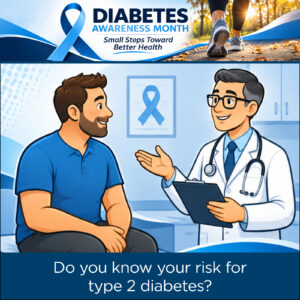 Know Your Risk for Type 2 Diabetes
Type 2 diabetes is the most common form of diabetes. Risk factors include being age 35 or older, having a family history of diabetes, being physically inactive, having excess weight or having a history of gestational diabetes.
Prediabetes occurs when blood sugar levels are higher than normal but not yet high enough for a type 2 diabetes diagnosis. Many people with prediabetes don’t experience noticeable symptoms, making routine screening especially important.
Talk with your primary care provider about your risk factors and whether a blood sugar test is right for you.

Recognize the Warning Signs
Diabetes symptoms can develop gradually and may be easy to overlook. Common warning signs include increased thirst, frequent urination, unexplained weight loss, fatigue, blurry vision and slow-healing wounds.
However, some people with type 2 diabetes experience few or no symptoms. Regular preventive care can help identify elevated blood sugar before complications develop.
If you notice unusual changes in your health, don’t wait to discuss them with your healthcare provider.

Small Habits Can Make a Big Difference
Healthy lifestyle choices play an important role in preventing or delaying type 2 diabetes and managing blood sugar levels.
Regular physical activity helps the body use insulin more effectively. Aim for activities you enjoy, such as walking, swimming or cycling. Choosing balanced meals with vegetables, whole grains, lean proteins and fiber-rich foods can also support healthy blood sugar levels.
Getting adequate sleep, managing stress, and maintaining a healthy weight are additional ways to support long-term wellness.
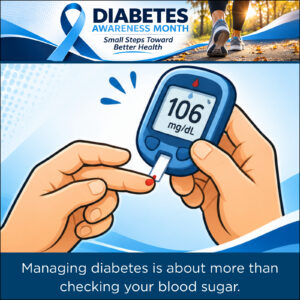
Take Control Through Preventive Care
Managing diabetes involves more than monitoring blood sugar. Regular primary care visits can help you stay on top of blood pressure, cholesterol, kidney health, and recommended eye and foot exams.
For those living with diabetes, working closely with a healthcare team can help prevent complications and support an active, healthy lifestyle.
This November, turn awareness into action. Whether it’s scheduling a screening, making a small lifestyle change or following up with your healthcare provider, every step toward better health matters.